
If you have ever heard a click-click-click on a tight parking-lot turn, you have already met the CV axle. We see torn boots and worn joints all the time on the cars we inspect here in Tyler, and you can usually catch the problem early with a flashlight and a slow circle in an empty lot.
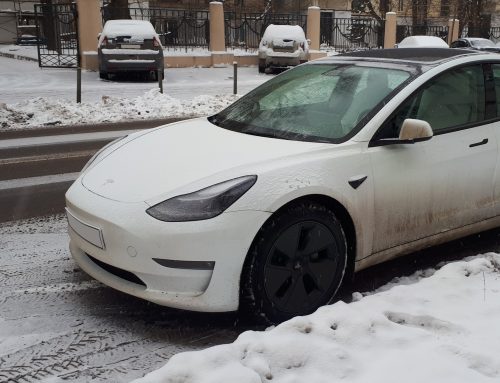
These same joints show up on electric cars as well as gas ones.
How a CV axle works
A constant velocity axle, also called a CV axle or a halfshaft, carries power from the transmission or differential out to a drive wheel. The joint keeps the wheel turning at the same speed as the shaft, even at an angle, as when you turn or the suspension moves over a bump.
A regular U-joint speeds up and slows down during each revolution once the angle gets larger, which creates vibration. That is why front-wheel-drive cars, and many vehicles with independent suspension, use CV joints instead. A typical outer CV joint can work at about 47 to 50 degrees (Vehicle Service Pros).
Inner and outer joints
Each CV axle has two joints. The outer joint, at the wheel, is usually a fixed ball-type joint, often called a Rzeppa joint. Steel balls ride in a cage between an inner and outer race, so the joint can flex through large steering angles without changing speed. It usually wears sooner than the inner one, because it works at steeper angles and sits closer to road debris.
The inner joint, at the transmission or differential, is usually a plunge joint, often a tripod design with three rollers in a housing sometimes called a tulip. The plunging movement lets the shaft change length as the suspension moves, and the joint typically works at a much smaller angle, often around 20 to 30 degrees (AA1Car; Vehicle Service Pros).
Boots, grease, and why they matter
Both joints are packed with a special high-temperature, high-pressure grease and sealed inside a flexible boot. Ordinary chassis grease does not belong in a CV joint. The boot keeps the grease in and water and dirt out, and a healthy joint typically needs no service until that boot is torn, cracked, or comes loose.
Boots get brittle with age and heat, and they can also be cut by road debris. Once a boot splits, the spinning joint slings grease out, and grit and moisture work their way in. That combination wears the balls, rollers, and tracks in a hurry.
Front-wheel drive and all-wheel drive
A front-wheel-drive car typically has two CV axles, one for each front wheel. An all-wheel-drive vehicle usually has four, two in front and two in back. Many rear-wheel-drive cars with independent rear suspension use them at the rear as well.
How to spot a bad CV axle
A clicking or popping sound on tight turns, especially when you accelerate with the wheel near full lock, usually points to a worn outer joint.
A clunk when you accelerate, lift off, or shift into gear often points to play in the inner joint.
A shudder or vibration under acceleration, even in a straight line, is more often the inner joint. A vibration that simply grows with road speed is more likely a tire, a wheel, or a bent rim. Engine or transmission mounts can mimic some of this too.
The visual giveaway is dark grease slung onto the inside of the wheel, the knuckle, or the inner fender liner. In our experience, the smear on the fender liner is easy to miss if you only glance at the wheel itself.
If a badly worn joint is ignored long enough, it can come apart. The engine may still run, but the car can lose drive to that wheel and leave you stranded.
Simple checks you can do
For a visual boot inspection, turn the steering all the way to one side so you can see the outer boot behind the wheel. Check the inner and outer boots on each drive axle, including the clamps. Flex the folds with a flashlight and look for splits, dry or brittle rubber, and fresh grease around the boot or thrown onto nearby parts.
For a parking-lot check, find an empty lot, go slowly, and turn the steering all the way. Make a tight circle in each direction, then try the same thing in reverse. A click or pop that gets louder in the turn, especially in reverse, usually confirms a worn outer joint. A clunk or shudder when you accelerate and lift off leans toward the inner joint. Stay at low speed.
Tie-rod ends, wheel bearings, and motor mounts can make similar noises, so treat these checks as a starting point, not a final diagnosis.
Why catching a torn boot early matters
A torn boot is not automatically a ruined axle, but the clock starts as soon as it opens up. If you catch it early, the joint is still quiet, and the grease is still clean, a shop can often clean the joint, pack it with the right grease, and install a new boot. Once the joint is clicking or vibrating, or the boot has been leaking for a long time, a new boot will not put the worn metal back. At that point the axle usually needs to be replaced.
RepairPal’s national average, last updated September 3, 2026, is about $411 to $528 for a CV boot replacement and about $1,283 to $1,381 for a full CV axle, not including taxes or related work, and costs vary by vehicle and location. RepairPal and NAPA both note that boot-service labor is often close to the labor for a complete axle, so many shops replace the whole shaft once the joint is already in doubt.
When we inspect a car, we always look at the boots. We have seen fresh tears on joints that were still quiet, and boots that had been leaking long enough that the joint was already clicking.
Frequently asked questions
What does a bad CV axle sound like?
A click or pop on tight turns usually means a worn outer joint. A clunk on acceleration, or when you shift into gear, more often points to the inner joint.
What is the difference between the inner and outer CV joint?
The outer joint, at the wheel, handles large steering angles. The inner joint lets the shaft change length as the suspension moves.
Can you keep driving with a torn CV boot?
A fresh tear does not always mean the joint is already ruined, but you should not ignore it. Once grease escapes and dirt gets in, the joint wears quickly.
Is a vibration always a bad CV axle?
No. Vibration under acceleration can point to a worn inner joint, but a shake that simply grows with speed is more often a tire or wheel issue.
Do I need a new axle, or just a new boot?
If you catch a torn boot early and the joint is still quiet, a boot replacement may be enough. If the axle is already clicking or vibrating, the axle usually needs to be replaced.
Do electric cars have CV axles too?
Yes. Many electric cars use CV axles too, because the axle still has to flex as the suspension moves and the wheels steer.
We have extensive knowledge working with Porsche, Tesla, BMW, Mercedes, Volvo, Chevrolet, Ford, Toyota, Acura, Lexus, Ram, Dodge, Jeep, Kia, Hyundai, and many more. We’ve worked with Hummers, diesel platforms, mini EV platforms, and all of those have given us ample experience to know what we’re getting into to help people make the right choices. From our home in Tyler, Texas, we deliver nationwide. We ship all domestic and foreign made vehicles.
A few minutes taking The Motorphilia Match Maker can save you weeks and months of hassles.
If you want help buying the right car, start with The Motorphilia Match Maker. Give us a call at (430) 247-2588. We are here 24/7. motorphilia.com.
Sources
- MOOG, What is a CV Axle?
- Tomorrow’s Technician, An In-Depth Look At CV Axles
- AA1Car, CV Joints
- Vehicle Service Pros, CV Joint Tech: Overview of Joint Design and Service Tips
- NAPA Know How, What Is a Constant Velocity Joint?
- NAPA Know How, Ask the NAPA Experts: How to Replace a CV Axle Boot
- NAPA / Trakmotive Tech Bulletin, Top 5 Noise Symptoms of a Worn CV Shaft
- O’Reilly Auto Parts, How to Test and Replace a CV Shaft
- Haynes, How to Check and Maintain CV Joint Boots
- YourMechanic, How to Check the CV Boots on Your Car
- RepairPal, CV Boot Replacement Cost Estimate (estimates last updated September 3, 2026)
- RepairPal, CV Axle Replacement Cost Estimate (estimates last updated September 3, 2026)
Motorphilia has been matching people with their perfect cars for nearly three decades, and Aaron Smith, the owner, has invested millions of dollars working on cars and picked up a lot along the way. We were certified to work on Tesla in 2022, but we’re not limited to just that. We actually have experience working on nearly every make and model in the industry today.


Leave A Comment