
When a check engine light comes on, most of us feel a knot in the stomach. Is it a loose gas cap, or is something expensive starting to fail? The car already knows more than the light is telling you. An OBD-II scanner lets you read that information yourself, and we think every car owner should have one in the glove box.
You just need a clearer starting point before you walk into a shop, go to an inspection, or look at a used car.
What OBD-II is, and where the port lives
OBD-II stands for on-board diagnostics, second generation. It is the standardized computer system that watches the engine, transmission, and emissions equipment on modern cars. The U.S. Environmental Protection Agency requires it on all 1996 and newer passenger cars and light trucks sold in the United States (EPA, California Air Resources Board). When the system finds a problem, it turns on the check engine light, also called the malfunction indicator lamp, and stores information a scan tool can read.
The connector is almost always under the dash on the driver’s side, usually near the steering column or in the driver’s footwell (EPA, Edmunds, AAA). Plug the scanner in, turn the key on, and the tool talks to the car. If you drive a 1995 or older vehicle, the system was not yet standardized, and a regular OBD-II tool may not help (AAA).
What a scanner shows you
A basic scan can tell you more than a five-character code. Trouble codes are the stored and pending faults behind the light. A stored code is confirmed. A pending code is one the computer has seen but has not yet confirmed, so the light may still be off (How-To Geek). Freeze frame is a snapshot of what the engine was doing when the fault set, such as speed, rpm, coolant temperature, and load. Live data shows sensor readings while the engine is running, so you can watch fuel trims, temperatures, and other values change in real time (How-To Geek, Car and Driver). Readiness monitors show whether the car has finished its own emissions self-tests since the codes were last cleared or the battery was disconnected. “Ready” means that test has run. “Not ready” means it has not (Texas Department of Public Safety).
Why owning one is worth it
The EPA notes that OBD can identify a loose or missing gas cap, which wastes fuel, or an engine misfire, which can damage the catalytic converter. A steady light means get the car checked soon, but it is not usually an emergency. A blinking light often means a severe misfire, so reduce speed and load and have it looked at promptly (EPA, Consumer Reports). Tighten the gas cap first and give the car a few short trips. If that was the problem, the light may go out on its own. If it stays on, read the code before you replace parts.
An inexpensive scanner costs less than a typical diagnostic fee, and it gives you the same first information the technician will pull (Consumer Reports, RepairPal, Edmunds). Use it to ask better questions, not to start buying parts on a guess (AAA).
If your area uses an OBD emissions inspection, the station will check the light and the readiness monitors. Clearing codes or disconnecting the battery resets those monitors to “not ready” until the car finishes its self-tests again. In Texas, a 2001 or newer vehicle can usually pass with one non-continuous monitor still not ready, but two or more will fail (Texas DPS). Checking readiness at home can save a wasted trip (How-To Geek).
A scanner is also useful when you are screening a used car before you buy. A dark dash does not always mean a clean computer. Look for stored and pending codes, then check readiness. If several monitors show “not ready,” codes may have been cleared recently, a red flag worth asking about. It can also follow a battery change or a legitimate repair (How-To Geek). Leave the information as you found it.
Over time, write down a code when the light comes on, note whether it returns after a repair, and compare the same live data later (How-To Geek).
Basic scanners and Bluetooth tools
You do not need a professional shop tool for this. Basic plug-in code readers show codes, and many also show freeze frame, live data, and readiness. Bluetooth scanners are a small adapter that pairs with a phone app, which can make the same information easier to read (Car and Driver). We will compare specific tools in a separate article.
A code is a clue, not a parts list
The code typically just points you in the direction of the problem (Consumer Reports). RepairPal puts it plainly: the data gives clues about what system has registered a malfunction, but not what part has failed. You might get an oxygen sensor code when the sensor is fine, and the real issue is a connector, wiring, or an exhaust leak (RepairPal). Use the scanner to get oriented, then let a proper diagnosis finish the job.
A note on Teslas and other EVs
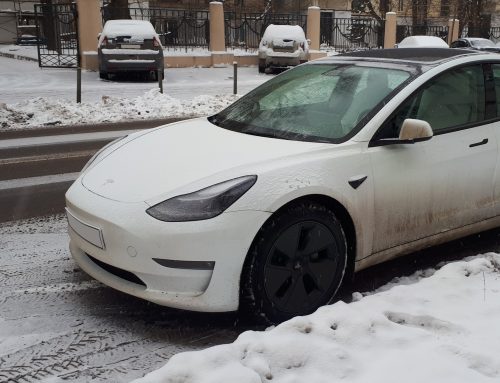
Standard OBD-II was built to monitor tailpipe emissions, and battery-electric vehicles were exempt from that federal mandate for years (Ars Technica). Tesla’s service information says some Model 3 and Model Y vehicles may not have an OBD connector installed, because it was not mandatory for electric vehicles until 2024 (Tesla). Teslas and other EVs do not use standard OBD-II emissions diagnostics the same way a gasoline car does. We confirm what is actually on the car rather than assuming a port means a standard scan.
FAQ
Do all cars have OBD-II?
Yes. All 1996 and newer passenger cars and light trucks sold in the United States are required to have it. Diesels followed in 1997, and a few 1994 and 1995 gasoline vehicles had it early (EPA, CARB).
Where is the OBD-II port?
Under the dash on the driver’s side, usually near the steering column or in the driver’s footwell (EPA).
Does a trouble code tell me exactly which part to replace?
No. It points to a system or condition, not necessarily the failed part (RepairPal, Consumer Reports).
Can I check whether my car is ready for an emissions inspection?
Yes. Most scanners have a readiness or I/M readiness screen. If too many monitors are “not ready,” wait until those self-tests finish (Texas DPS).
Why would readiness monitors be “not ready” on a used car?
Clearing codes or disconnecting the battery resets them. Several incomplete monitors can mean a recent erase, a battery change, or a repair that was just finished (How-To Geek, Texas DPS).
Will a regular OBD-II scanner work on a Tesla or another EV?
Not in the same way. Standard OBD-II emissions diagnostics were written for vehicles with tailpipes (Ars Technica, Tesla).
Sources
- U.S. EPA, “Do you drive a 1996 or newer car or light truck?” (EPA-420-F-02-016): https://www.epa.gov/sites/default/files/2013-08/documents/420f02016.pdf
- California Air Resources Board, On-Board Diagnostic II (OBD II) Systems Fact Sheet: https://ww2.arb.ca.gov/resources/fact-sheets/board-diagnostic-ii-obd-ii-systems-fact-sheet
- Consumer Reports, “What Does the Check Engine Light Look Like, and What Does It Mean?”: https://www.consumerreports.org/cars/car-repair-maintenance/what-does-check-engine-light-mean-a2041364753/
- Edmunds, “What Does Your Check Engine Light Mean?”: https://www.edmunds.com/car-maintenance/what-your-check-engine-light-is-telling-you.html
- AAA Via, “The Hidden Risks of DIY Car Diagnostics”: https://mwg.aaa.com/via/car/hidden-risks-diy-car-diagnostics
- Texas Department of Public Safety, “Ready or Not”: https://www.dps.texas.gov/section/vehicle-inspection/faq/ready-or-not
- How-To Geek, “Your inexpensive OBD-II scanner can tell you more than why the check-engine light is on”: https://www.howtogeek.com/your-inexpensive-obd-ii-scanner-can-tell-you-more-than-why-the-check-engine-light-is-on/
- How-To Geek, used-car OBD-II scanner guide (July 23, 2026): https://www.howtogeek.com/tool-every-used-car-buyer-should-bring-test-drives/
- Car and Driver, “Tested: Best Automotive OBD-II Scanners”: https://www.caranddriver.com/car-accessories/g42938164/best-obd2-car-scanners-tested/
- RepairPal, “Check Engine Light Diagnosis & Testing Cost Estimate”: https://repairpal.com/estimator/check-engine-light-diagnosis-testing-cost
- Ars Technica, “Why don’t EVs have standard diagnostic ports, and when will that change?”: https://arstechnica.com/cars/2023/12/why-dont-evs-have-standard-diagnostic-ports-and-when-will-that-change/
- Tesla Model 3 Service Manual, “On-Board Diagnostics (OBD) Connector”: https://service.tesla.com/docs/Model3/ServiceManual/en-us/GUID-79B765C9-662A-45EE-88C9-4D34EBC4C947.html
We have extensive knowledge working with Porsche, Tesla, BMW, Mercedes, Volvo, Chevrolet, Ford, Toyota, Acura, Lexus, Ram, Dodge, Jeep, Kia, Hyundai, and many more. We’ve worked with Hummers, diesel platforms, mini EV platforms, and all of those have given us ample experience to know what we’re getting into to help people make the right choices. From our home in Tyler, Texas, we deliver nationwide. We ship all domestic and foreign made vehicles.
A few minutes taking The Motorphilia Match Maker can save you weeks and months of hassles.
If you want help buying the right car, start with The Motorphilia Match Maker. Give us a call at (430) 247-2588. We are here 24/7. motorphilia.com.
Motorphilia has been matching people with their perfect cars for nearly three decades, and Aaron Smith, the owner, has invested millions of dollars working on cars and picked up a lot along the way. We were certified to work on Tesla in 2022, but we’re not limited to just that. We actually have experience working on nearly every make and model in the industry today.


Leave A Comment