
Are CVTs the bad guys? Not anymore, and not all of them.
If you’ve wondered, is a CVT bad, the short answer is that CVT reliability depends on how the transmission is built, and how it’s maintained.
A CVT, or continuously variable transmission, doesn’t shift between fixed gears. It changes ratios smoothly, usually with a steel belt or chain running between two pulleys. That’s why it feels so smooth and gets such good fuel economy. It’s also why some CVTs got a bad name.
Here’s the thing a lot of people miss: not all CVTs are built the same. A Toyota CVT vs Nissan CVT comparison makes that clear.
Toyota went its own way. Most Toyota hybrids, like the Prius, Camry Hybrid, and RAV4 Hybrid, use what’s called an eCVT. There’s no belt and no pulleys at all. It’s a planetary gearset working with electric motors, and Consumer Reports has called the CVTs in Toyota and Honda hybrids strong performers. On the gas side, Toyota’s newer Direct Shift-CVT adds a real physical launch gear, so the belt isn’t taking the hardest load when you pull away from a stop. The belt takes over once you’re moving, where it’s most efficient.
Some earlier CVTs, including some from Nissan, earned the reputation the hard way. Overheating, shudder, and slipping were common complaints, especially as the miles stacked up. Nissan later extended the CVT warranty on several of those older models, including certain Altimas, Sentras, Rogues, and Pathfinders, from 60,000 miles to 84,000 miles. The weak spots of a belt-style CVT are real: heat, belt and pulley wear, sensitivity to old or wrong fluid, and less tolerance for heavy towing or hard abuse.
But here’s what doesn’t get said enough. Other transmissions aren’t any more or less reliable. In our experience, we’re seeing a lot more transmission trouble on today’s vehicles than we did in the past, across the board. What the reliability data does show is a clear pattern of problems tied to newer transmissions built for fuel economy. Consumer Reports flagged an emerging wave of transmission problems back in 2015, in a survey of more than 740,000 vehicles, tied to dual-clutch gearboxes, CVTs, and eight- and nine-speed automatics. By 2021, Consumer Reports said owners were reporting more problems with complex eight-, nine-, and 10-speed transmissions. In that same survey, owners reported transmissions that needed replacement after as little as 5,000 miles.
Look at the 10-speeds. Ford and GM developed their 10-speed automatic together, and you’ll find it in vehicles like the F-150, Mustang, Silverado, Tahoe, and Camaro. Owners have reported 10-speed transmission problems such as harsh shifts, slipping, and shudder. Both companies have issued software updates and technical fixes, and both have issued recalls on some 10-speed-equipped vehicles. Ford redesigned a key internal drum in 2022. Ford’s own engineering records counted 90 possible shifts in the 10-speed versus 30 in the old six-speed. That’s three times the shifts to get right.
That’s the real story. Every transmission has been evolving to squeeze more miles out of every gallon. More gears packed into nearly the same space, thinner fluids, and smarter software all make cars more fuel efficient, but they also tighten the margins for failure. Today’s transmissions are less forgiving of heat, old fluid, and skipped maintenance than the simple, heavy units of decades ago.
The good news is the learning curve works both ways. Nissan and other brands are building much better CVTs today than they were ten years ago, with lower friction, updated hydraulics, and smarter software. The 10-speeds keep getting updated too. And maintenance has caught up. A lot of early trouble came from fluid that never got changed because it was sold as “lifetime” fluid. Today, more owners and shops know regular transmission fluid service is one of the best things you can do.
People are paying more attention to transmission fluid change intervals than ever before, and for good reason. Swapping out the fluid every 35,000 to 40,000 miles is a better idea today than it has ever been, and we think almost every vehicle with an automatic transmission on the road today should follow it. Fresh fluid is cheap insurance for a transmission that runs tighter and hotter than the ones that came before it.
So CVTs aren’t the big bad guys. All transmissions are a growing, evolving technology that we keep learning to build better and take care of better. Pick the right one, maintain it, and it can serve you well for a long time.
A few questions we hear a lot:
Is a CVT bad?
Not automatically. CVT reliability depends on the design, the maintenance, and how the vehicle is used. Some earlier belt-style CVTs earned a bad reputation. Toyota’s hybrid eCVT is a different design, and newer CVTs from Nissan and other brands are much improved.
What’s the difference in a Toyota CVT vs a Nissan CVT?
Most Toyota hybrids use an eCVT with a planetary gearset and electric motors, and no belt or pulleys. Many Nissan models use a belt-and-pulley Xtronic CVT. Toyota’s gas Direct Shift-CVT is a belt-style unit with a real launch gear for takeoff. The designs are not interchangeable, and neither is their track record.
What are common 10-speed transmission problems?
On the Ford and GM 10-speed automatics, owners have reported harsh or delayed shifts, slipping, and shudder. Both companies have released software updates and hardware fixes, and both have issued recalls on some 10-speed-equipped vehicles.
What are transmission failure symptoms to watch for?
Common transmission failure symptoms include harsh or delayed shifts, slipping, shudder or shaking, a flare in engine RPM without a matching increase in speed, hesitation when you pull away, and unusual noises. If you notice those, have the vehicle checked.
How often should you change transmission fluid?
We think swapping the fluid every 35,000 to 40,000 miles is a smart interval for almost every vehicle with an automatic transmission today, including CVTs and 10-speeds. Change it sooner if you drive hard, tow, or live in the heat.
Have CVTs and other modern transmissions improved?
Yes. CVTs have come a long way, and 10-speeds keep getting updated. The bigger lesson is that all of these transmissions need fresh, correct fluid more than the old “lifetime” fluid marketing suggested.
Not sure which cars fit you best? A few minutes taking The Motorphilia Match Maker can save you weeks and months of hassles: https://motorphilia.com/matchmaker/
Questions? Call or text us at (430) 247-2588.
Addendum: Where EVs Come Into Play
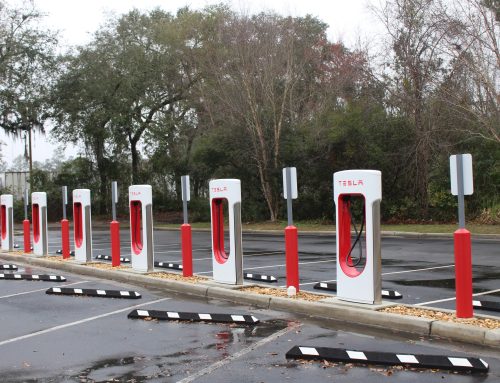
After all this talk about CVTs and 10-speeds, it is worth stepping back for a second, because electric cars sidestep the whole argument. An EV does not use a transmission the way a gas car does, and it does not rely on a stack of reductive gearing to get moving. Most of them run a simple single-gear setup between the motor and the wheels, and when you take all those gears, clutches, valve bodies and fluid out of the picture, you take a lot of the complications and part failures out with them.
The reason they can get away with it comes down to torque. An electric motor makes an enormous amount of it right from a standstill, so it simply does not need a gearbox to multiply its effort and push the car forward. That changes everything. It is one less critical, expensive failure for an owner to lose sleep over, and honestly, we think it is one more reason EVs are going to keep taking over more and more of the landscape.
Of course, the worry people always bring up with an EV is the battery. That fear is fading too. Batteries keep getting cheaper, and what used to feel like a financial albatross waiting down the road is turning into something closer to an accepted maintenance item, the same way people have long budgeted for a timing belt or a set of tires. On top of that, battery rebuilders are starting to pop up, offering stopgap and band-aid repairs that keep people on the road without the cost of a full replacement.
When you add it all up, we believe EVs will eventually become the primary way cars are driven. People tend to settle on whatever is more reliable, more efficient, less expensive and better to drive, and more and more, those things lean into the EV’s court. Internal combustion engines are very expensive to build, very expensive to engineer and very expensive to maintain over time, and it is just not really the same thing. You can already see it in other parts of the world, where EVs are growing rapidly in places like China and Europe. It’s only because of political turmoil that EVs are being pushed against so hard in the United States. But that’s a whole other discussion. We’ll talk about that later.


Leave A Comment